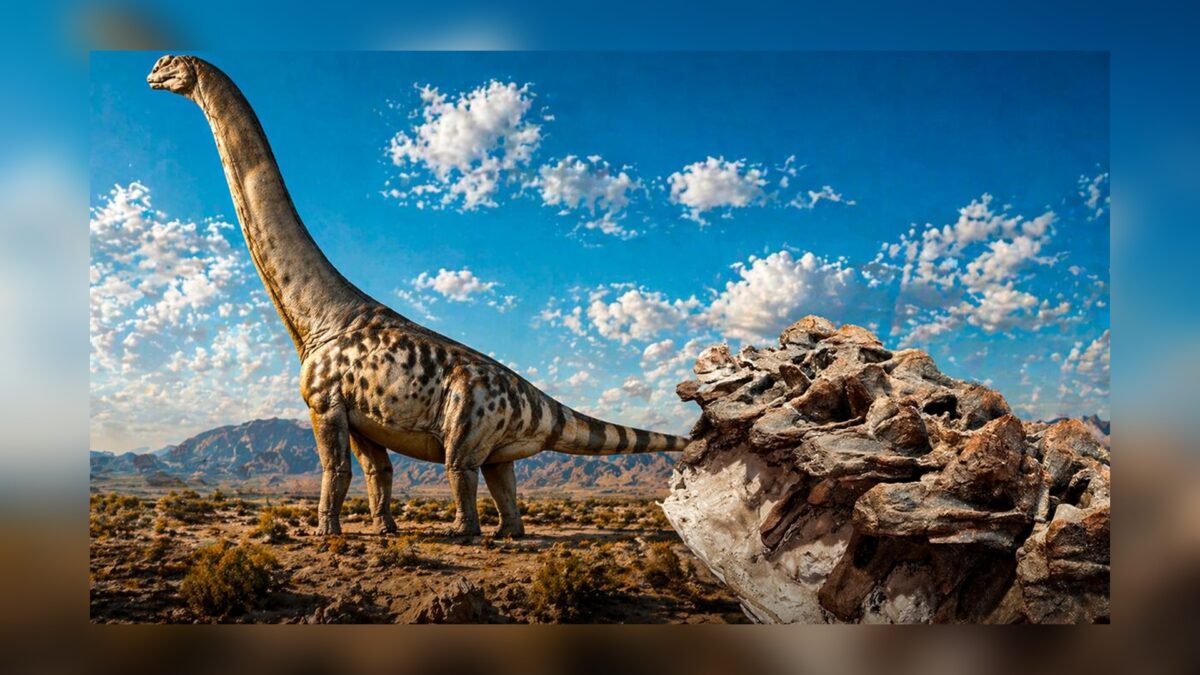
Researchers from an international team have identified a new species of dinosaur, named Bicharracosaurus dionidei, which inhabited the province of Chubut, Argentina, approximately 160 million years ago. This discovery, published in the journal PeerJ, marks a significant advancement in the understanding of the Late Jurassic, a geological period from which few fossils are known in the Southern Hemisphere.
The Bicharracosaurus is a macronarian sauropod that reached lengths of between 15 and 20 meters and weighed around 20 tons. Its discovery originated from Dionide Mesa, a rural inhabitant who found a giant bone in the field. In honor of his contribution, scientists from the Egidio Feruglio Paleontological Museum (MEF) have named the dinosaur after him.
The dinosaur’s skeletal structure includes vertebrae, ribs, and hip fragments that exhibit unique characteristics, suggesting it could be the first brachiosaurid from the Jurassic in South America. This finding not only enriches the fossil record of the region but also highlights the importance of collaboration between the community and science in preserving natural heritage, as we reported in this note about the significance of citizen collaboration.
The Bicharracosaurus dionidei adds to the list of discoveries in the Cañadón Calcáreo Formation, which already hosts other significant dinosaurs such as Tehuelchesaurus benitezii. This discovery could offer new perspectives on the diversification of sauropods in the Southern Hemisphere.