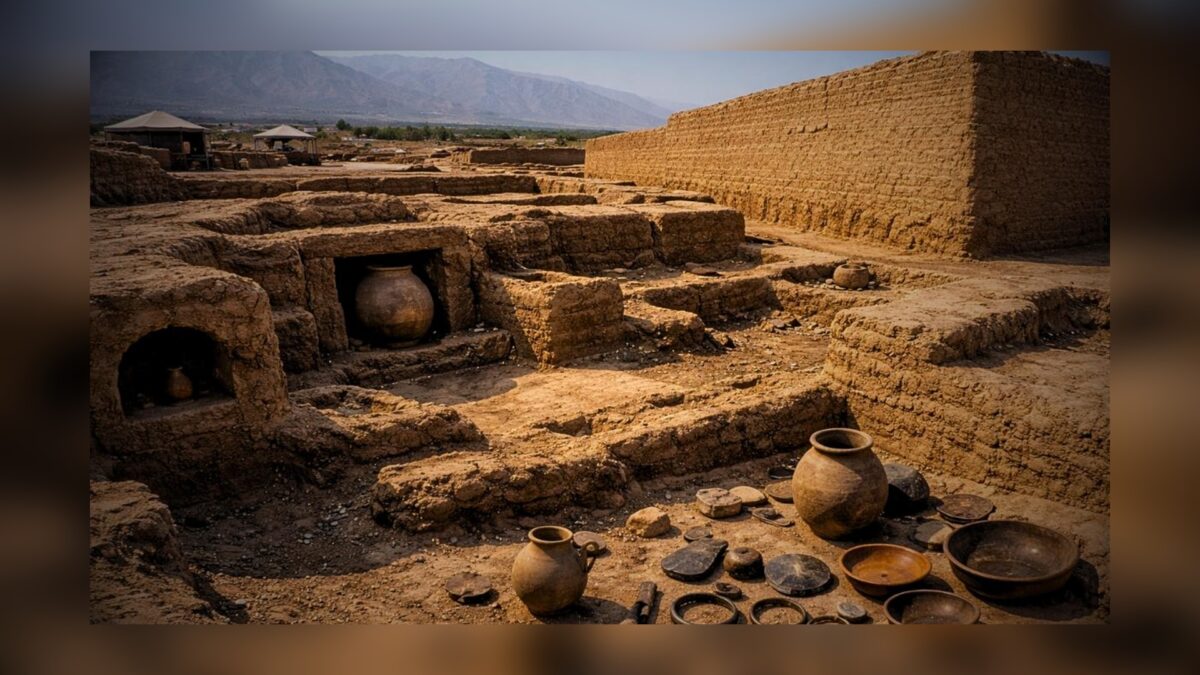
A team of archaeologists from China and Uzbekistan has made a significant advancement in the study of ancient history by discovering a 3,000-year-old city at the Bandikhan II site, located in the Surxondaryo region of Uzbekistan. This finding, which was supported by the Termez State University and the Termez Archaeological Museum, provides new insights into daily life and urban organization during the early Iron Age.
The city, featuring a square layout, was built in the 10th century BC and remained in use until the 8th century BC. Although the site was discovered in 1969, excavations only began in 2023, allowing researchers to explore just a portion of the 10,000 square meters of the settlement. According to Chinese archaeologist Zhu Jiangsong, this site is the largest and best-preserved in the Bandikhan oasis.
Among the most notable findings are remains of pottery, stone tools, and a 2.1-meter-high eastern wall. These discoveries not only reveal aspects of daily life but also demonstrate the evolution of construction techniques in the region, as previously reported.