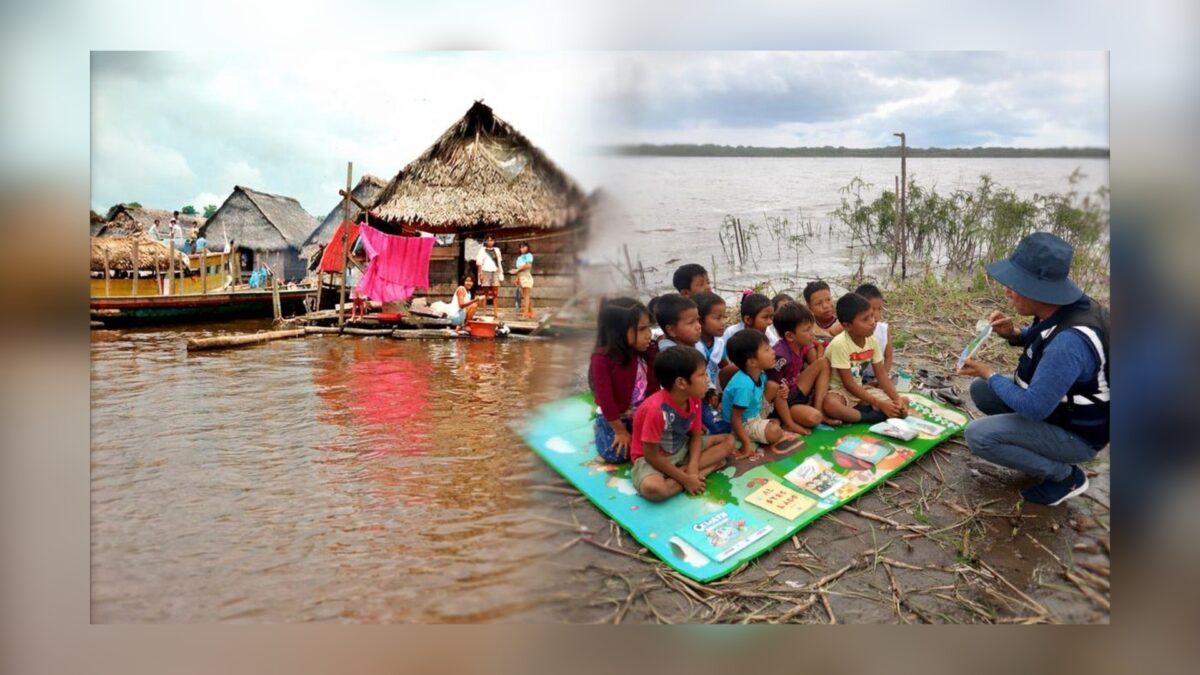
According to the report “Vulnerability of People in the Territory 2013–2024” from the National Center for Strategic Planning (Ceplan), the regions of Loreto and Ucayali are among the most vulnerable in Peru. In Ucayali, 49.4% of households lack basic services, while in Loreto this figure rises to 54.5%. The lack of access to water, electricity, and sanitation contributes to a critical situation that affects not only the Amazon but the entire country.
The report reveals that the Vulnerability Index reached 35.2 points in 2024, a slight improvement from 38.5 points in 2013. In an interview with La República, expert Enrique del Águila emphasized that limited access to basic and health services is one of the biggest problems in these regions. In the educational sector, the results are alarming: nearly 80% of fourth-grade students in Ucayali and 87.2% in Loreto do not understand what they read.
The territorial dispersion and institutional weakness are factors that perpetuate this lag. Amazonian communities, many of which are difficult to access, face significant challenges in receiving basic services. “Without a territorial approach, the Amazon could drift even further away from the rest of the country,” warned Del Águila. The situation is exacerbated by high levels of anemia and child malnutrition, which reach alarming figures in both regions.
It is essential for the next government to focus its efforts on closing infrastructure gaps and improving the quality of life for these communities, as has been mentioned in recent news.