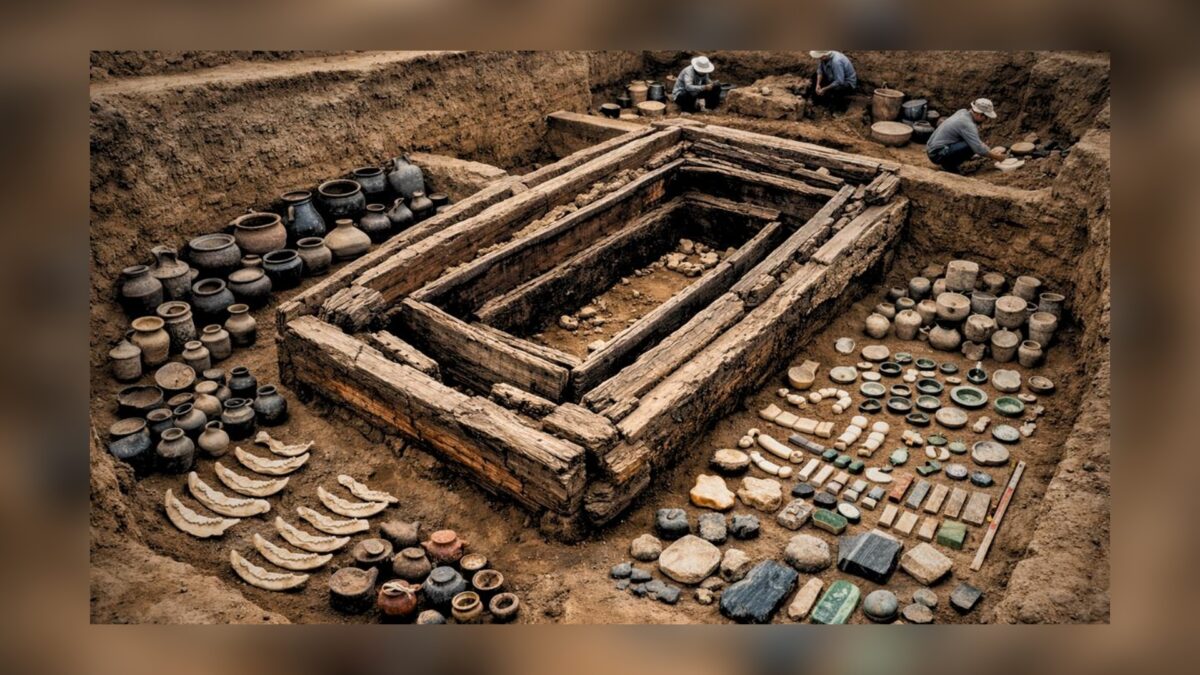
Chinese archaeologists have discovered over 40 prehistoric tombs in Henan province, a finding that could unveil secrets of a civilization dating back 5,000 years. The excavations, which began in 2023 at the Wangzhuang ruins, have identified a potential political center of the Dawenkou culture, according to Zhu Guanghua, an associate professor at Capital Normal University.
Among the graves, a notable funerary structure approximately 5 meters long is believed to have belonged to an ancient ruler. So far, 27 tombs have been excavated, with the most remarkable containing over 100 pieces of pottery, nearly 200 jade ornaments, and bone tools, alongside animal remains considered symbols of wealth.
Li Zinwei, deputy director of the Institute of Ancient History, noted that these findings reflect the early cultural exchanges in Chinese civilization and provide insights into its diversity. Additionally, archaeologists have found evidence suggesting that the main tomb may have been looted, indicating a social complexity and hierarchy in ancient society.
This discovery adds to other recent findings that reveal the rich history of the region, such as the huaico in Machu Picchu, which has also sparked interest in the archaeological field.