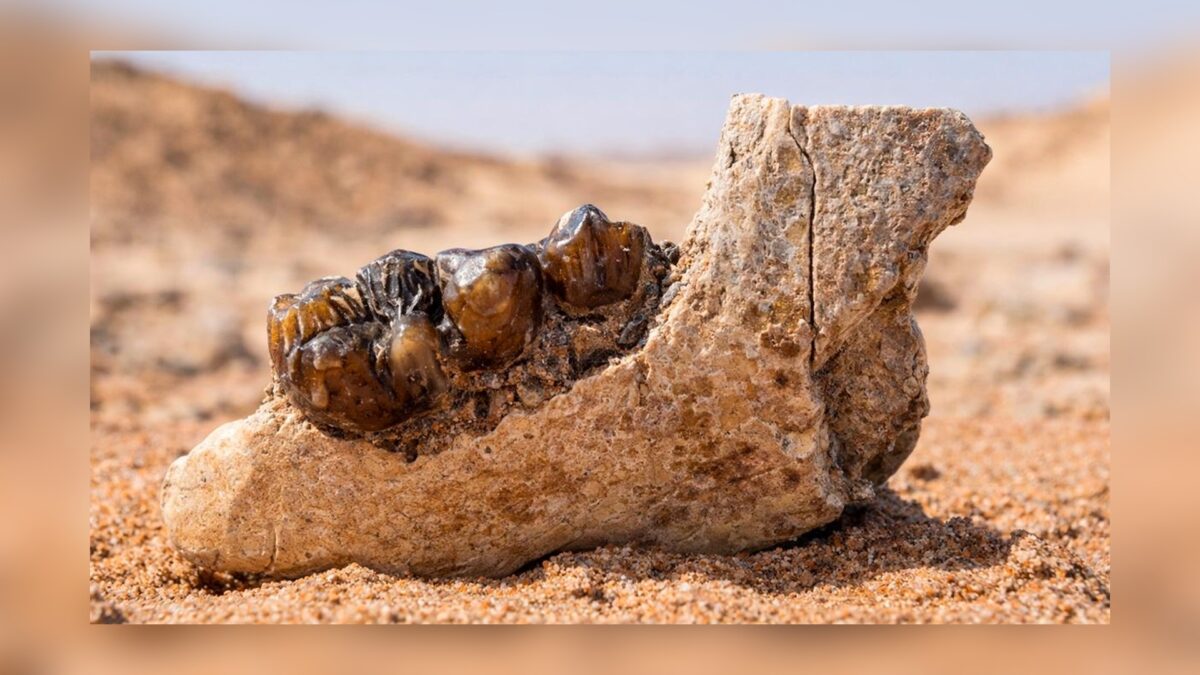
A recent finding in Egypt is revolutionizing the understanding of the origins of modern apes. The fossil, known as Masripithecus moghraensis, was discovered at the Wadi Moghra site and is estimated to be between 17 and 18 million years old. This discovery, published in the journal Science, suggests that North Africa played a crucial role in the evolution of primates during the early Miocene.
According to paleontologist Hesham Sallam, who leads the research team, “this ape reveals a diversity that we had not anticipated.” The fossil exhibits characteristics that are closer to current species compared to other specimens found in East Africa. Its teeth indicate a diet based on fruits and seeds, demonstrating remarkable adaptability to its environment.
This finding also challenges the theory of the exclusive origin of apes in the eastern part of the continent, positioning itself as a “bridge” between Africa and Eurasia. Experts plan new explorations in the region to delve deeper into the diversification of these species. As mentioned earlier, the research opens new perspectives on primate evolution, marking a new chapter in paleontology.