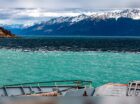
Researchers have found microorganisms in Antarctica that manage to survive in extreme conditions by feeding on air. This study, published in the journal The ISME Journal, reveals that these microbes utilize aerotrophy, a mechanism that allows them to metabolize gases such as hydrogen and carbon monoxide, which is vital in an environment where temperatures can drop below –20 °C and sunlight is scarce.
During the Antarctic winter, photosynthesis is not an option for flora, making these microorganisms the main players in biological activity. Their adaptability is remarkable, as some of them can generate energy even at temperatures of up to 75 °C.
The research was not limited to soils, as intense microbial activity was also observed in the Southern Ocean. There, millions of genes were identified, many still unknown, suggesting a complex biological system that influences key processes such as the carbon cycle. This search for information becomes crucial at a time when climate change is a global concern.
For more details on other related studies, you can consult the analysis on the epidemiological alert for leptospirosis in Peru.