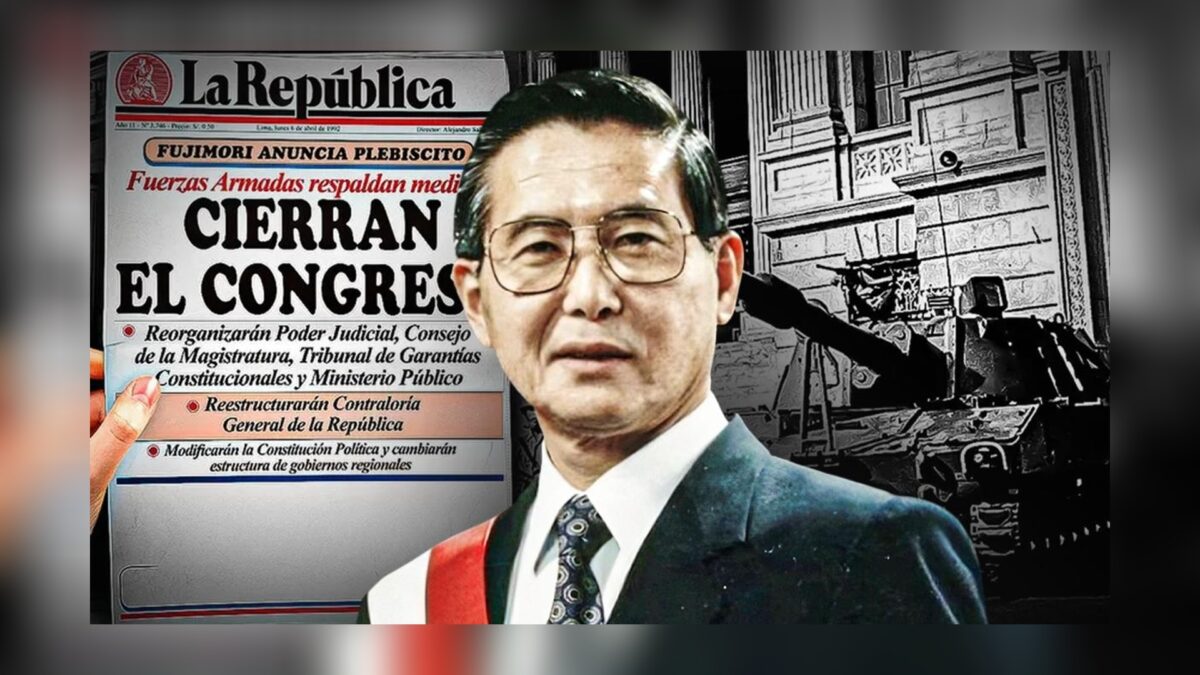
On April 5, 1992, Alberto Fujimori executed a self-coup that drastically transformed the political landscape in Peru. Through a televised message, he announced the dissolution of Congress and the intervention of various state institutions, marking the beginning of an authoritarian regime. In his speech, Fujimori justified these measures as a necessary “restructuring” for the functioning of the country. However, this action not only involved the suppression of the legislative power but also military control over the media, which suffered censorship and repression.
The Armed Forces and the National Police took control of key institutions, preventing access to parliamentarians and restricting civil liberties. The closure of Congress represented a break from the balance of powers established by the 1979 Constitution, allowing Fujimori to govern without a Parliament for several years. Following the self-coup, the international community, including the Organization of American States (OAS), condemned these actions and initiated diplomatic efforts.
Despite external pressure, the Fujimori regime consolidated its power, characterized by human rights violations and acts of corruption, as evidenced in the Barrios Altos and La Cantuta cases. For more details on the context of this historical event, you can read this article about other events that have shaped politics in Latin America.