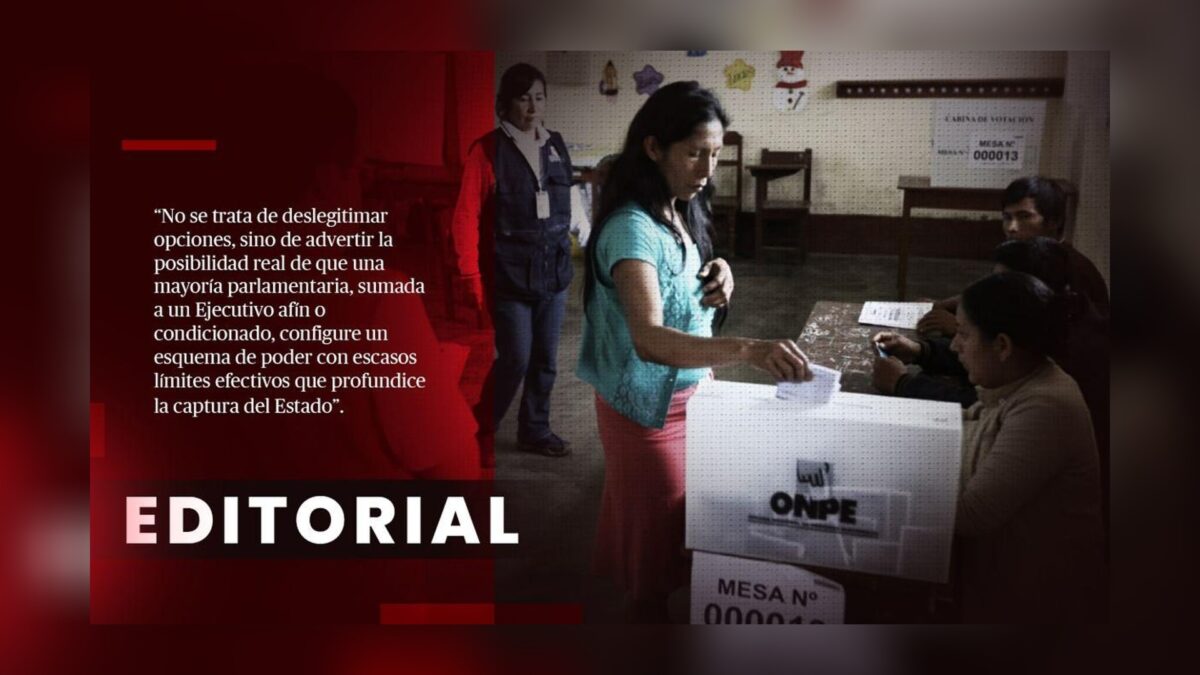
Peru is facing a significant democratic challenge just days before the elections, reminding us that the defense of democracy goes beyond casting a vote. According to a survey by IEP, more than 80% of citizens recognize the deep flaws in the current political system. In this regard, the election of authorities is not just an electoral process, but a decision about the type of democracy that is desired to be strengthened or weakened in the future.
This April 5 marks 34 years since Alberto Fujimori’s self-coup, an event that closed Congress and broke the constitutional order. Although today we do not face tanks in the streets, the risk of a corrupt pact seeking to concentrate power persists. This coalition, which includes Fuerza Popular and other groups, employs similar tactics to ensure their permanence in power, taking advantage of the legitimacy granted to them by the ballot boxes.
The recent attempts at institutional breakdown, as evidenced by the case of Pedro Castillo, demonstrate that the authoritarian temptation is not exclusive to one political group. However, the current electoral climate suggests that the forces dominating the polls may prioritize political control over institutional balance. Therefore, it is crucial for citizens to participate in the elections with a historical awareness of the risks we face.