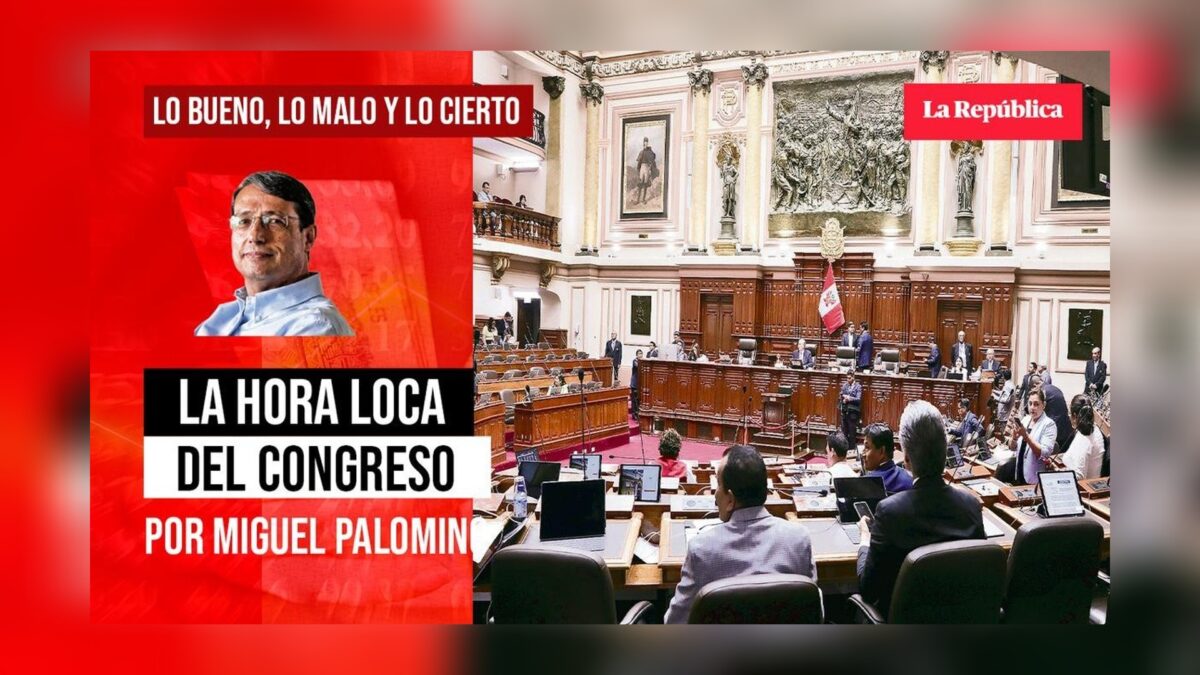
The recent approval by Congress of three laws that increase public spending by 15 billion soles annually has raised alarms about the country’s fiscal management. This spending represents a significant increase in a national budget that is estimated to reach 258 billion soles by 2026. Despite the budget having tripled in size over the past 14 years, citizen satisfaction with state services has drastically fallen, from 52% in 2012 to the current 28%. The situation is further complicated by the interpretation of Article 79 of the Constitution by the Constitutional Tribunal in 2020, which allows Congress to initiate spending in subsequent years. This interpretation has led to uncontrolled spending increases, with no congressman opposing the recent initiatives. In this regard, the Constitutional Tribunal could be key to limiting current extravagance, as the lack of control could lead to unsustainable fiscal deficits. The fiscal target for next year, with a deficit of 1.4% of GDP, seems unachievable. If the course is not corrected, the consequences will fall on the entire population, affecting employment and the country’s economic future. Thus, the challenge for Congress resembles a “crazy hour,” where spending is unleashed without control. For more details on the current political situation, you can consult our article on the economic proposals of the candidates for Parliament.