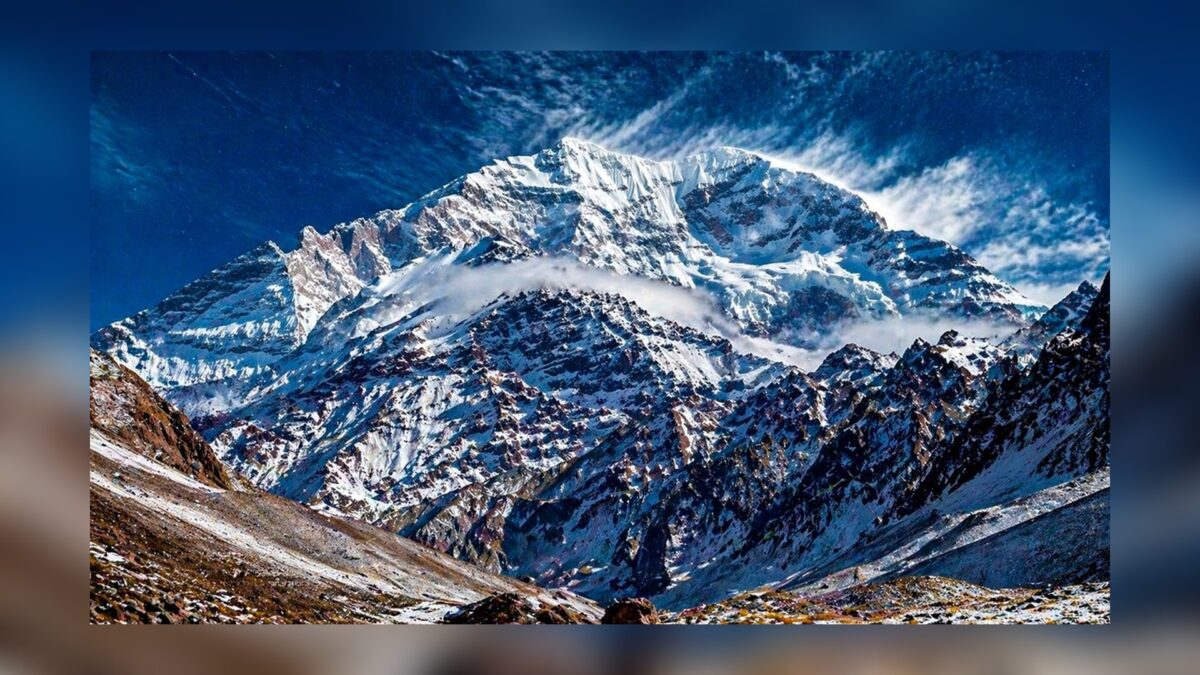
The Aconcagua, located in the province of Mendoza, Argentina, stands as the highest mountain in the world outside of Asia, reaching an official height of 6,961 meters above sea level. This colossal peak, known as the ‘Roof of America,’ is part of the Andes mountain range, a system that presents a significant challenge for climbers. Unlike many peaks in the region, Aconcagua is not of volcanic origin but tectonic. Its formation is due to the uplift of tectonic plates, giving it unique characteristics in its relief.
According to data from National Geographic, the climatic conditions surrounding the mountain complicate the ascent, with strong winds and low oxygen levels affecting climbers’ endurance. The mountain is also known for its topographic prominence, which ranks second in the world, surpassed only by Everest. The name Aconcagua comes from indigenous languages and translates to ‘stone sentinel,’ highlighting its cultural significance. However, it is also nicknamed ‘Mountain of Death’ due to the risks it poses during ascents.
For more details about South America’s geography, you can check our article on the largest nuclear power in the Americas.