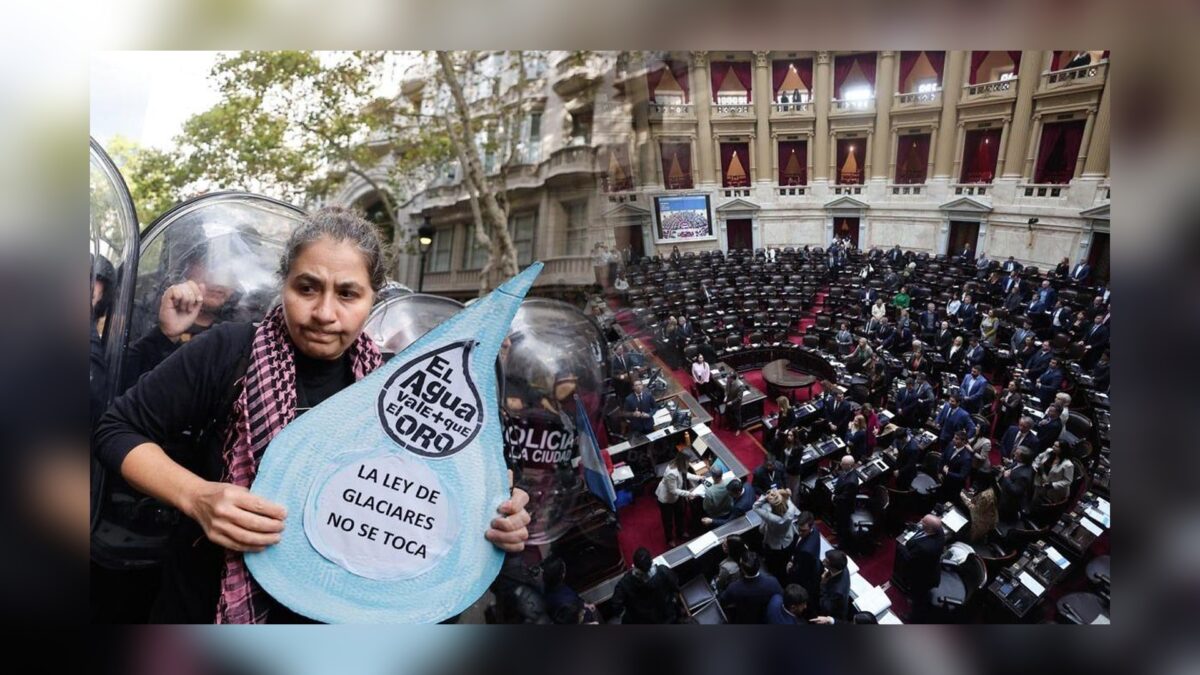
The Argentine Congress has approved a controversial reform to the glacier law, driven by President Javier Milei. The legislation, which received 137 votes in favor, 111 against, and three abstentions, allows provinces to decide which areas can be exploited by mining, removing the automatic protection of glaciers. This modification alters the landscape established since 2010, opening the door to mining projects in previously restricted areas.
Protests quickly erupted. Thousands of demonstrators gathered outside Congress, demanding the protection of glaciers and warning about the risks the law poses to water access. Organizations like Greenpeace have criticized the decision, stating that it could exacerbate the climate crisis and affect millions of people.
The government defends the law as a step towards “environmental federalism,” claiming it will facilitate investments and regional development. On the other hand, experts and opponents have expressed concern, warning that the new legislation could jeopardize the water supply for approximately 70% of the population. The discussion about the constitutionality of the regulation has also emerged in the legislative sphere, generating intense debate about its viability and implications for the environment.