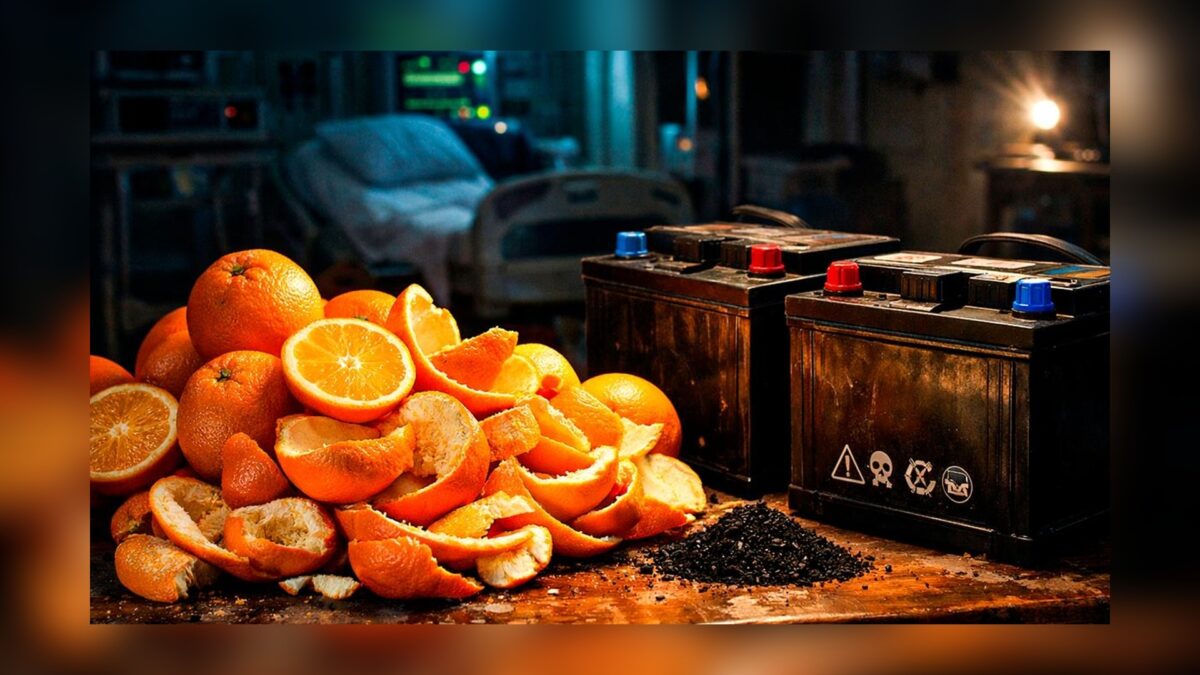
A group of researchers from the CSIR-Central Electrochemical Research Institute in India has successfully transformed orange peels into a key material to enhance the performance of lead-acid batteries. This finding has the potential to benefit critical sectors such as hospitals and banks, especially during power outages.
The study reveals that the incorporation of just 0.1% of orange waste into the negative electrode of these batteries increases charge acceptance by nearly 89%. The experimental process involves the carbonization of the peels at high temperatures and their activation with potassium hydroxide, generating a meso- and microporous structure that optimizes electrochemical reactions.
Moreover, the cells that include this plant material showed an increase of up to 20% in their discharge capacity compared to control cells. This not only improves battery efficiency but also represents an economical and sustainable alternative in the context of a circular economy.
The use of recycled materials like orange peels opens new possibilities for energy storage, which is essential for ensuring the continuous operation of critical devices in emergency situations. For more details on innovations in energy storage, you can read about how global research is utilizing agricultural biomass.