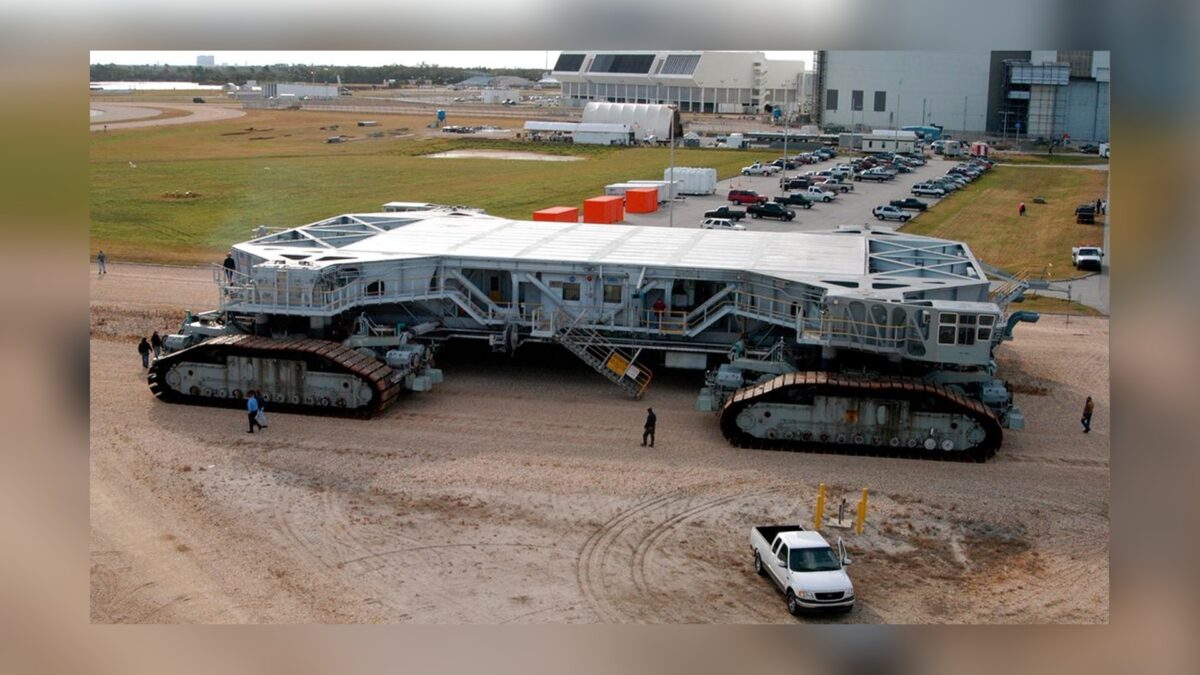
The NASA Crawler Transporter, a 3,000-ton tracked vehicle, is essential for transporting rockets during space missions. With a length of nearly 40 meters, it has played a key role in the launch of iconic rockets, from the Saturn V to the current Space Launch System (SLS). Although it was manufactured in the 1960s, it remains crucial for the success of the Artemis II mission, which aims to take four astronauts to lunar orbit.
This colossus moves at a maximum speed of 1.6 km/h when loaded, allowing for controlled and precise movement. Its traction system is based on eight tracks that require approximately 625 liters of diesel to travel just 1 km, a consumption justified by the need to keep the rocket in an upright position during transit. NASA has modernized the Crawler Transporter, investing in new engines and hydraulic systems to optimize its operation.
The Crawler Transporter has accumulated over 3,800 kilometers since it entered service, demonstrating its value in the Artemis program, which seeks to establish a sustained human presence on the Moon and prepare for future missions to Mars. Engineer Charlie Blackwell-Thompson highlighted its performance after a recent transport test, reaffirming its importance in the success of space missions. For more details about the program, you can read about the Artemis I Mission.