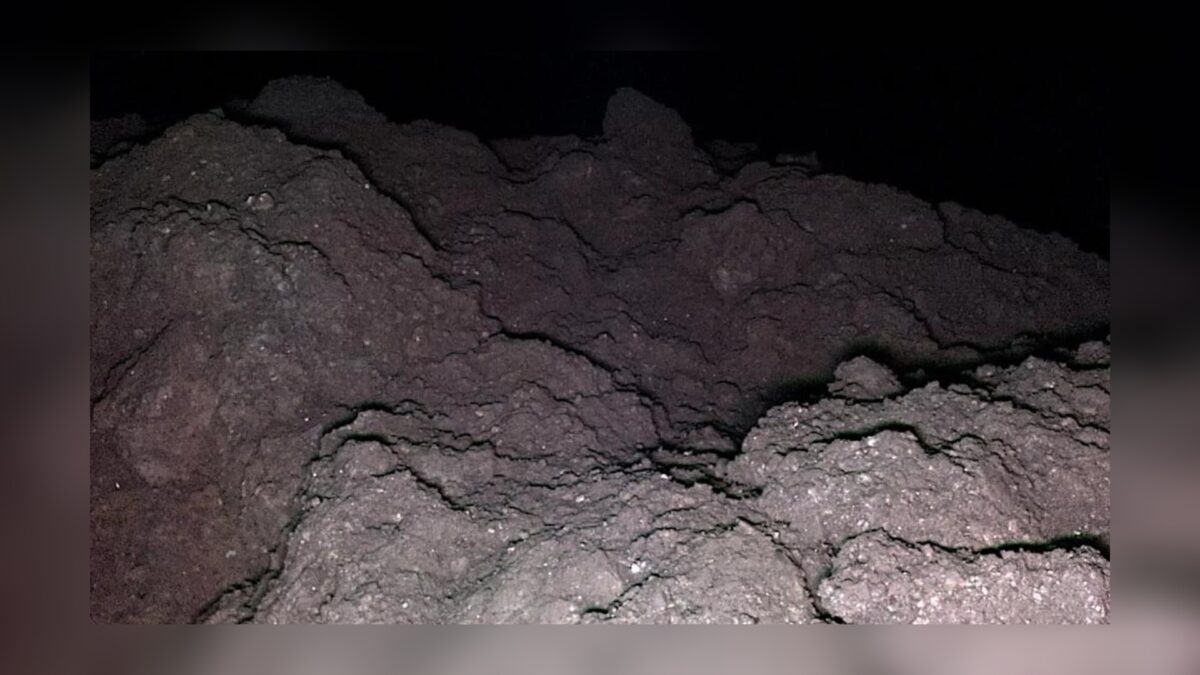
A recent analysis of samples brought back from asteroid Ryugu has revealed the existence of five nucleobases fundamental to life: adenine, guanine, cytosine, thymine, and uracil. This discovery, published in Nature Astronomy, suggests that the essential elements of biology are not exclusive to Earth. The Japanese mission Hayabusa2, which collected these samples in 2020, has been pivotal in shedding light on the origin of life on our planet.
Researchers found balanced amounts of purines and pyrimidines, differing from observations made on other celestial bodies. The presence of these nucleobases on the asteroid supports the theory that the compounds necessary for life may have formed in space and arrived on Earth through meteorite impacts. According to Toshiki Koga, the study’s leader, “this relationship indicates that ammonia may have played an important role in the composition of these molecules.”
This finding is crucial, as understanding these chemical bases could bring us closer to answering one of science’s oldest questions: how did life emerge over 3.5 billion years ago? Research on asteroids like Ryugu reinforces the idea that the ingredients for life are widely distributed throughout the solar system, raising new hypotheses about prebiotic evolution.